





























































Halogen car bulbs
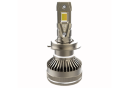
Most cars with conventional headlights use halogen bulbs, and the headlight optics are designed precisely around their filament. Simply fit them into the same base and the headlight shines exactly as the manufacturer set it up, with no modifications or decoders. The range covers standard types, long-life versions, variants with brighter or whiter light, and 12 V bulbs for cars as well as 24 V bulbs for lorries. Halogen car bulbs with E approval are intended for use on public roads.
Halogen car bulbs
Inside the quartz glass envelope there is a tungsten filament and a filling of halogen gas. While the bulb is lit, evaporated tungsten is returned to the filament thanks to the halogen cycle, so the glass does not blacken and the filament can run at a higher temperature than in an ordinary bulb. The result is brighter, whiter light and a longer service life. Because the optics of a halogen headlight are designed around the exact position of the filament, these bulbs produce a correctly shaped beam without further adjustment.
The choice comes down to the base and the voltage. H7 and H1 usually serve a single function, such as dipped or main beam, while H4 has two filaments for both functions in one bulb. 12 V applies to cars, whereas lorries and buses use 24 V. A bulb with the wrong voltage will either burn out quickly or give only a weak light. You can find the type in the owner's manual or on the old bulb.
Alongside the standard version there are bulbs with higher light output, which shine further ahead of the car, and variants with a blue-tinted glass for whiter light. Both usually have a shorter life, as the filament runs hotter. For drivers who often travel with their lights on, long-life types are a good choice. The wattage must match the original bulb, for example 55 W for H7. More powerful 100 W bulbs are not road legal and can damage the reflector and wiring.
When replacing a bulb, do not touch the glass with your fingers. Skin oil bakes onto the glass as it heats up and can shorten the life of the bulb. If this happens, clean the glass with alcohol. Bulbs are best replaced in pairs, as they lose brightness over time and a new bulb would shine differently from the old one on the other side. After replacing them, it is worth checking the headlight alignment.
Halogen car bulbs marked with an E and a country number are type-approved under UNECE regulations and can be used in original headlights without further approval. They need no cooling or decoders and do not trigger error messages in the on-board electronics. A spare set of bulbs and fuses in the car makes a quick roadside replacement easy.