





































LED headlight bulbs
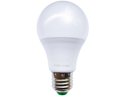
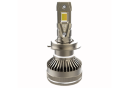
Whiter, brighter light, lower power consumption and a longer service life are the main reasons drivers replace the halogen bulbs in their headlights with LED versions. LED car bulbs are made with the same bases as halogen bulbs, such as H4, H7, H1 or H11, and fit into the original headlight. Models differ in cooling, luminous flux, dimensions and CANbus compatibility. For use on public roads, an LED replacement must be approved for the specific vehicle.
LED headlight bulbs
The starting point is the correct bulb base. The most common are H7 and H1 for dipped or main beam, H4 with both functions in one bulb, H11 and H8 in fog lights, and HB3 (9005) and HB4 (9006), mainly on Japanese and American cars. You can find the base type in the owner's manual, on the old bulb or on the headlight label. Dipped and main beams often use different bases, so it is worth checking both.
LED chips produce heat that has to be drawn away from the back of the bulb. That is why every LED car bulb has cooling, either active with a small fan or passive with an aluminium heat sink or braided copper strip. A fan removes heat more efficiently, while passive cooling is silent and has no moving parts. Before buying, measure the space behind the headlight, as a longer heat sink may prevent the dust cover from going back on.
The position of the chips is key to a proper beam pattern. They should sit in the same place as the filament of the halogen bulb; otherwise the light has no sharp cut-off and dazzles oncoming drivers. Many models therefore have a rotating base that can be adjusted after fitting so the chips face sideways. A colour temperature of around 6000 K corresponds to pure white light, and the figure in lumens shows how much light the bulb gives out.
Newer cars monitor the current drawn by the lighting circuit. Because an LED uses less power than a halogen bulb, the on-board system may report a failed bulb or the light may flicker. The solution is a CANbus-compatible version or a separate decoder fitted between the connector and the bulb. If the LED does not light up after connecting, it is often enough to turn the connector round, as LEDs are sensitive to polarity.
For use on public roads, an LED replacement in the main headlight must have approval for the specific car model. The list of approved vehicles is provided by the manufacturer of the type-approved bulb. LED car bulbs without approval are intended for off-road use. After replacing the bulbs, it is a good idea to have the headlight alignment checked so the light falls correctly on the road and does not dazzle.