


































































Filament storage and drying
Filament in most materials draws moisture from the air — and a damp strand prints worse. Filament storage and drying cover filament dryers, airtight dry boxes and vacuum bags, desiccants such as silica gel and hygrometers for checking the environment. They differ in capacity, temperature range and the type of material they are meant for — from simple boxes to heated dryers with settings. You choose them by the type of filament, the number of spools and whether it is mainly about storage or active drying.

Filament storage and drying
Most printing filaments are hygroscopic — they draw moisture from the air, which then shows up during printing as crackling, fine strands and a poorer surface finish. Filament storage and drying keep the strand dry before printing and between projects, and suit PLA, PETG, ABS, nylon and flexible TPU. The individual products differ in whether they dry the strand actively or only protect it from moisture.
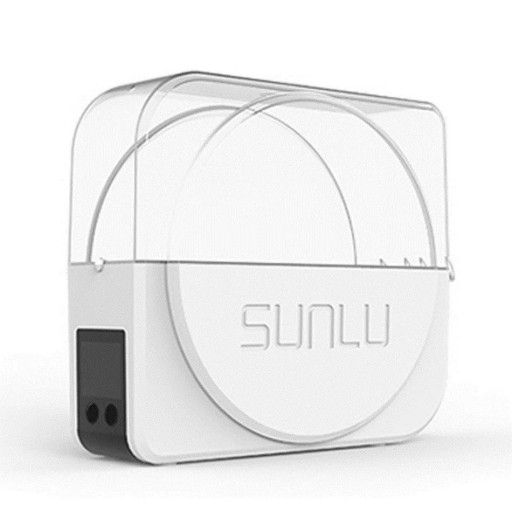
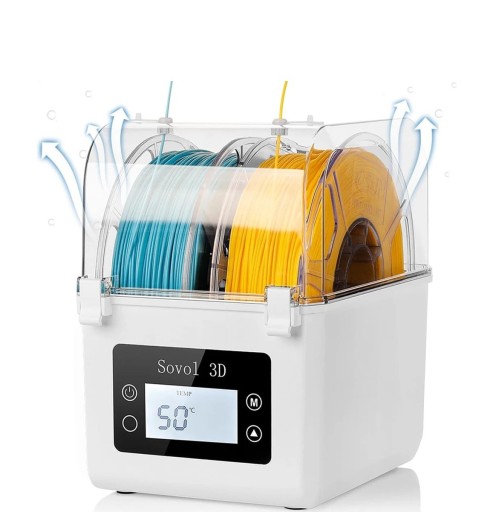
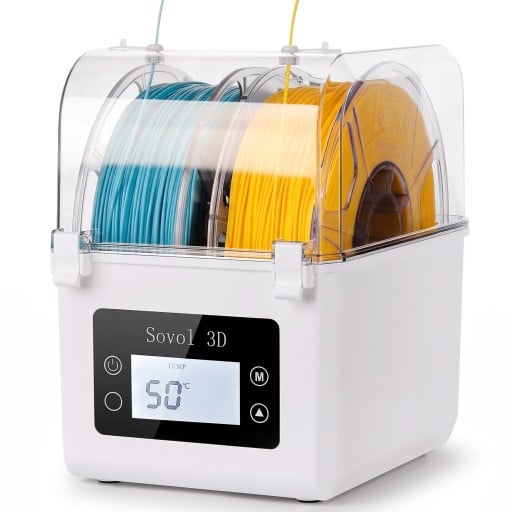
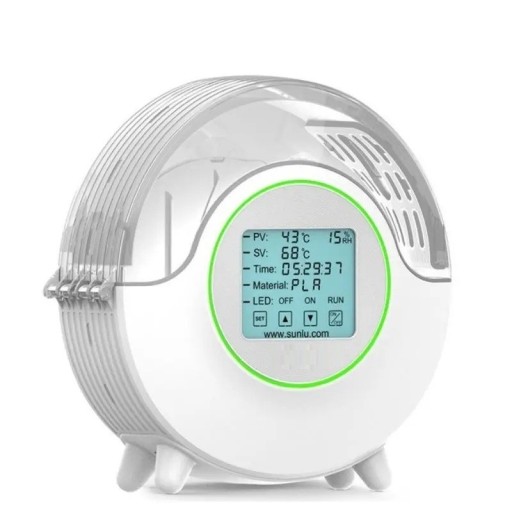
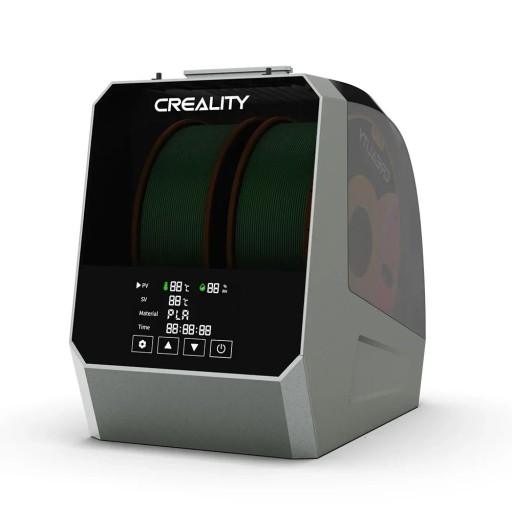
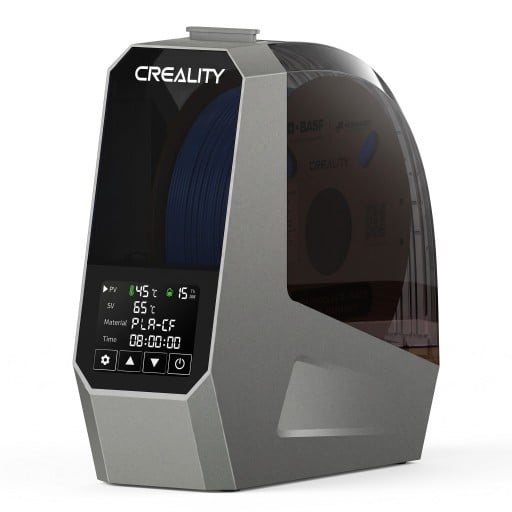
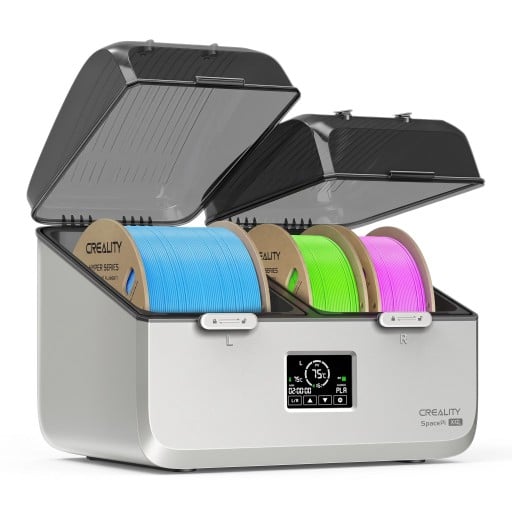
The most active are filament dryers — heated boxes that warm the strand to a set temperature and draw the moisture out of it, often with a timer and the option to print straight from the dryer. They differ in the number of spools, the temperature range and whether they also reach the higher temperatures for nylon or ABS. The right temperature and time are matched to the material so that the strand is not damaged.
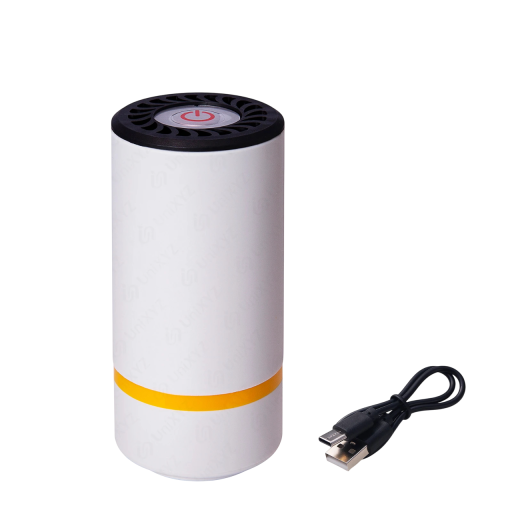
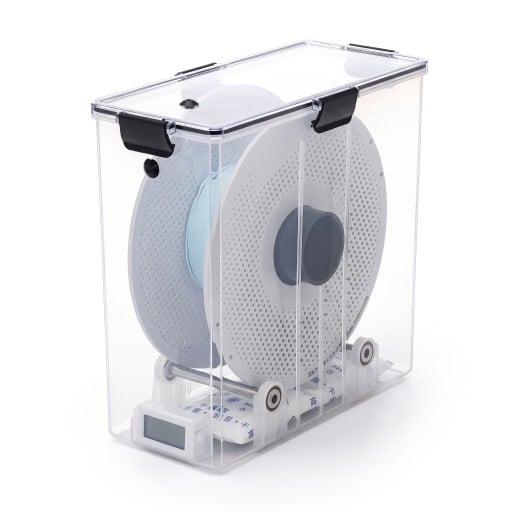
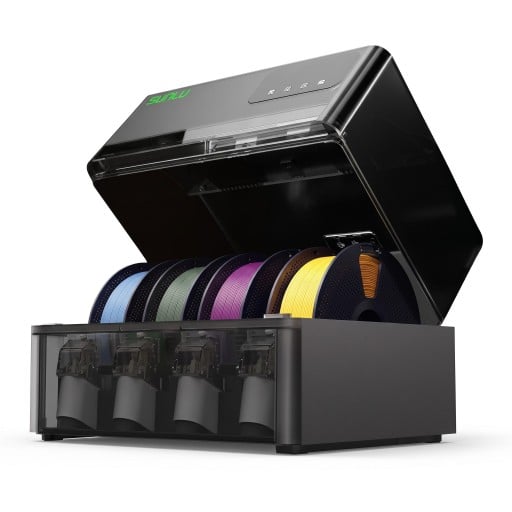
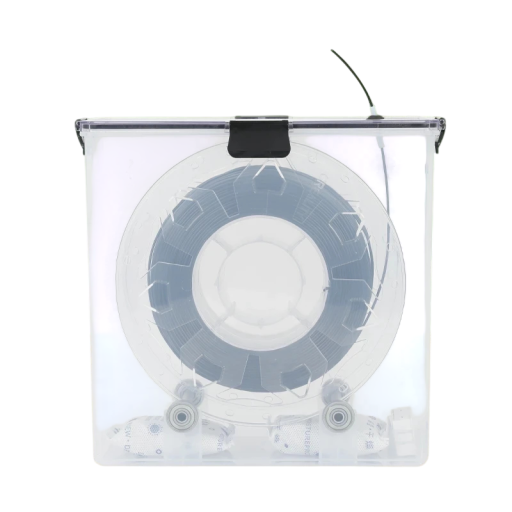
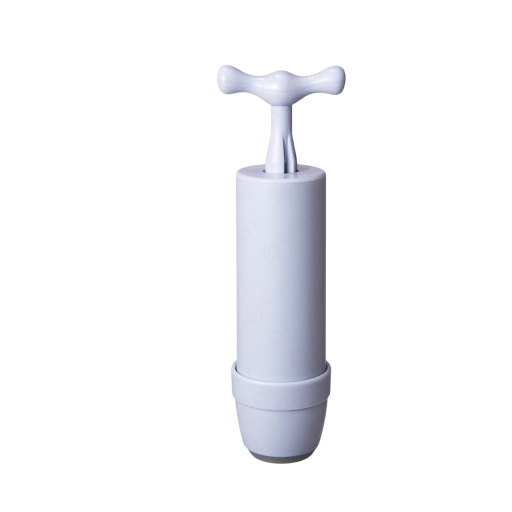
The second group is dry boxes and airtight storage — resealable boxes with a seal, vacuum bags and containers with a spool holder that you can feed straight into the printer. These also include stackable systems for several spools. They keep humidity low without using power and suit long-term storage.
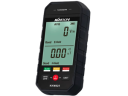
When choosing, desiccants and hygrometers help — silica gel and reusable desiccants that absorb the moisture inside the box, and hygrometers or indicators that show it. It pays to look at the capacity relative to the number of spools, the dryer's temperature range for the material and the option to regenerate the desiccant. Active drying can be combined with an airtight box so that the strand stays dry as long as possible.