







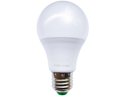








































LED indicator and brake light bulbs
Indicators, brake lights, rear lights and reversing lights are among the most important signal lamps on a car, because they show other drivers where you are and what you are about to do. LED bulbs light up instantly, use a fraction of the power and last considerably longer than conventional filament bulbs. They are made with bases such as P21W, PY21W, P21/5W or W21W and come in amber, red and white. For use on public roads, an LED replacement must be approved.
LED indicator and brake light bulbs
The right replacement is determined by the bulb base. The P21W with a BA15s bayonet has a single filament and is used in indicators, reversing lights and rear fog lights. The PY21W looks similar but has offset BAU15s pins, so a white bulb cannot be fitted in place of the amber one. The P21/5W with a BAY15d base has two filaments, a weaker one for the rear light and a stronger one for the brake light. Newer cars use capless W21W and W21/5W bulbs. You can find the type in the owner's manual or on the old bulb.
After switching indicators to LED, hyperflash often occurs. The control unit or flasher relay reads the low current draw as a failed bulb and warns you by flashing faster. The solution is a CANbus-compatible LED, a load resistor wired in parallel with the bulb or, on older cars, an LED-compatible flasher relay. The resistor gets very hot in use, so it should be mounted on a metal surface away from plastic parts and wiring.
The LED colour should match the lamp lens. An amber indicator lens calls for an amber LED, and a red brake light lens for a red one. A white LED will still light up behind a coloured lens, but part of the light is absorbed and the colour can look washed out. With clear lenses, a coloured LED is essential, because the indicator must shine amber and the brake light red.
An LED lights up about two tenths of a second sooner than a filament bulb, so the driver behind notices you braking slightly earlier. In dual-filament P21/5W and W21/5W bulbs, the LED must shine at two brightness levels so that braking is clearly visible. Because they produce less heat, LEDs put less strain on plastic lenses and bulb holders.
For use on public roads, an LED replacement in a signal lamp must have approval; otherwise it is intended for off-road use. Indicators and brake lights on both sides should shine with the same colour and brightness, so it is best to replace bulbs in pairs. After fitting, check that all lights work, including the hazard lights.