














































Table saws and band saws
A table saw makes straight rip and cross cuts in boards and battens, while a band saw handles curves, resawing and steel sections and tube. On the table saw the rip capacity and the riving knife decide, the latter keeping the kerf open and preventing kickback. On the band saw the key is cutting speed, because wood runs at around eight hundred metres per minute and metal roughly ten times slower. For steel a bi-metal blade is the one to fit, with the tooth pitch chosen to match the wall thickness.
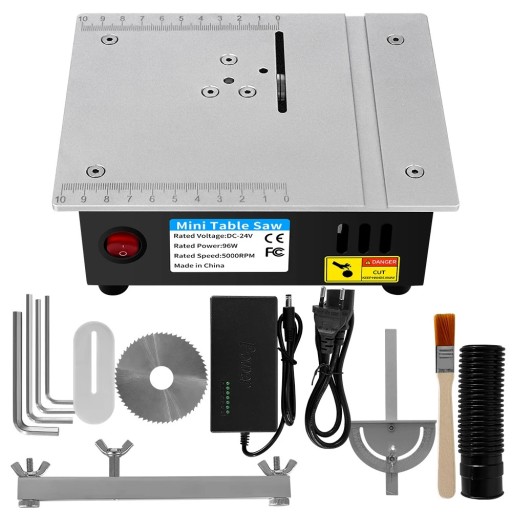
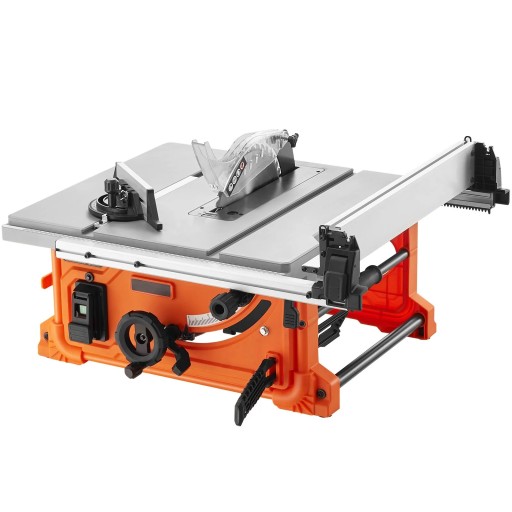
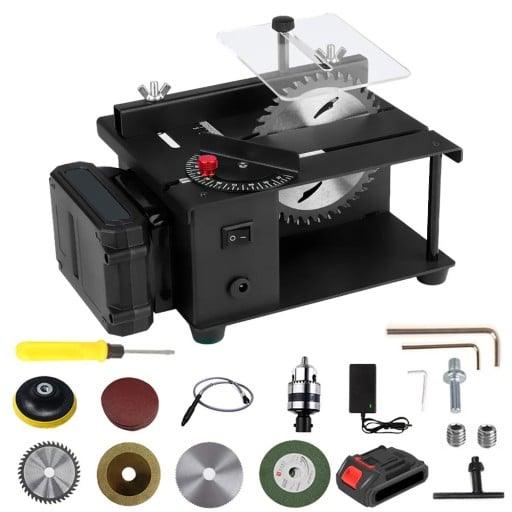
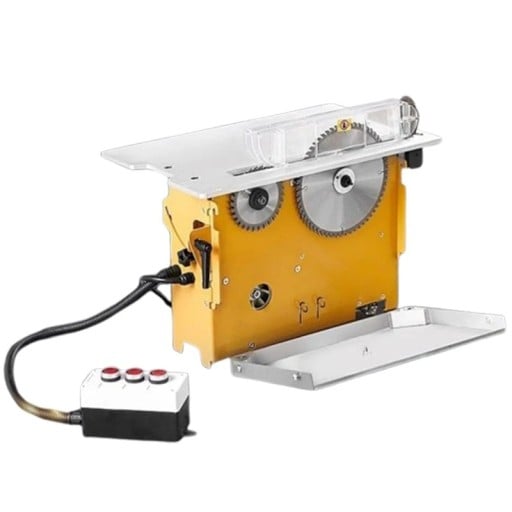
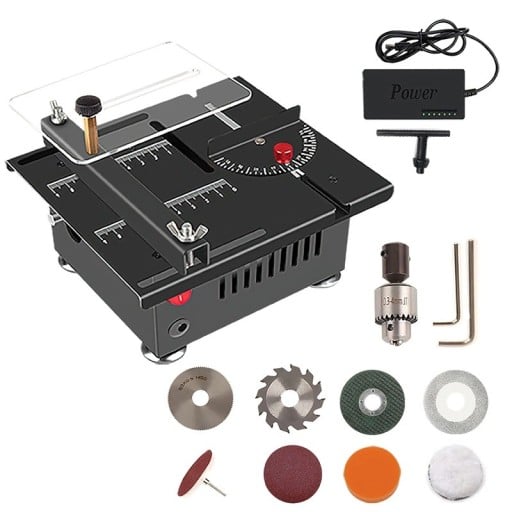
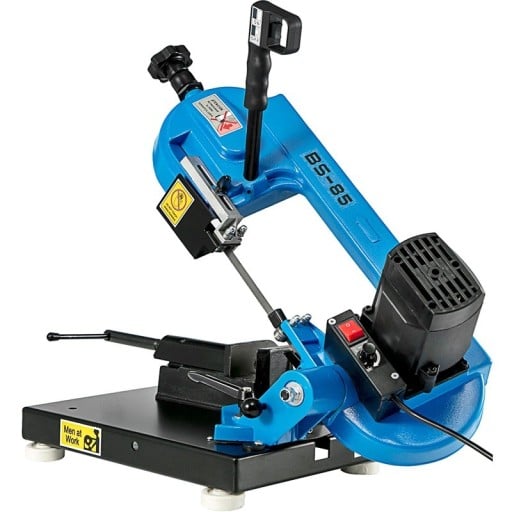
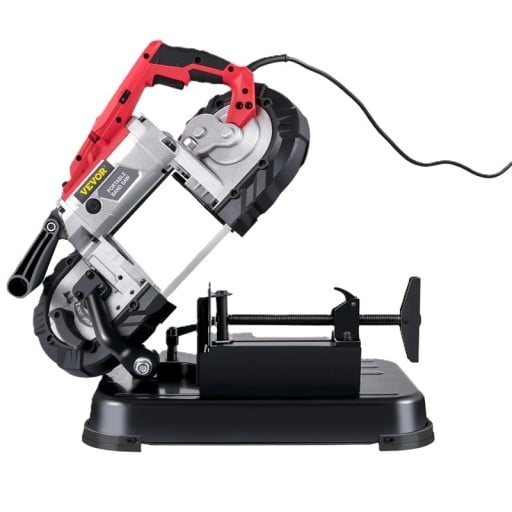
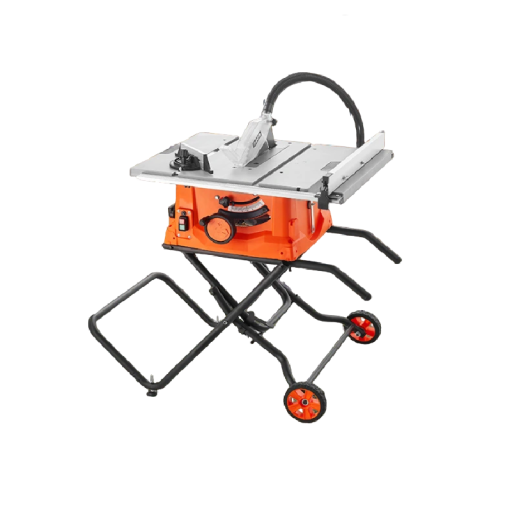
Table saws and band saws
A table saw and a band saw have in common that the machine stays put and the workpiece moves. The table saw has its blade standing proud of the top and makes straight rip and cross cuts in planks, boards and battens. The band saw runs an endless blade between two wheels, which is why it handles curves, resawing and steel sections and tube. Portable versions of both machines fit in a car and are often sold without a stand, which comes separately.
On a table saw the most important figure is rip capacity, that is, the distance between the blade and the rip fence at its furthest setting. Machines around sixty centimetres split a building panel down the middle, smaller portable models stop sooner and suit battens better. The second figure is depth of cut at a right angle, which with a 210 mm blade lands around 65 mm. Roughly four thousand revolutions per minute are enough for wood and plastic, while metal calls for a blade meant precisely for that material.
The most common table-saw accident comes from kickback, when the cut closes behind the blade and the plank is thrown back at the operator. The riving knife stands against it, holding the kerf open and following the blade even when the height is changed. The upper guard and the anti-kickback pawls do come off, but on an ordinary cut there is no reason for them to be sitting aside. The last few centimetres the plank is always fed with a push stick, never by hand beside the blade.
On a band saw cutting speed decides, because wood and metal call for entirely different figures. Wood takes a blade running at around eight hundred metres per minute, soft metal settles near a hundred and stainless slower still. That is why metal band saws carry stepless control, while wood band saws get by on two speeds. Cutting capacity states how thick a piece fits under the blade, on portable metal machines usually around 125 mm.
For metal a bi-metal blade is the one to fit, because the soft back takes the bending over the wheels and the hard teeth hold up in steel. Tooth pitch is chosen to match the wall thickness, and on thin tube at least three teeth must be engaged or a tooth breaks out. The work is held by the vice and the cut is fed without pressure, because the blade sets its own pace and pushing only ruins it.