







































































































































Resin moulds
Silicone and plastic moulds for casting resin — for trays, pendants, jewellery, paperweights and flowers set in resin. The mould decides the shape of the casting and also how its surface will look. Choose by the depth of the casting and by whether you want a glossy finish without polishing.


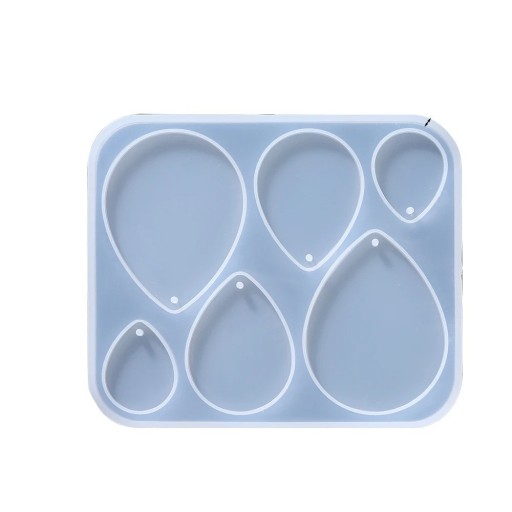



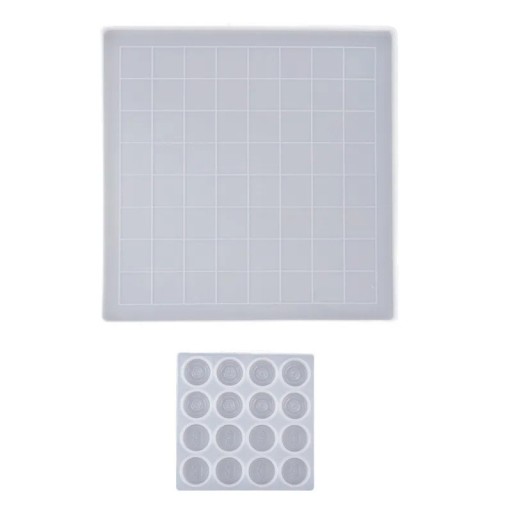

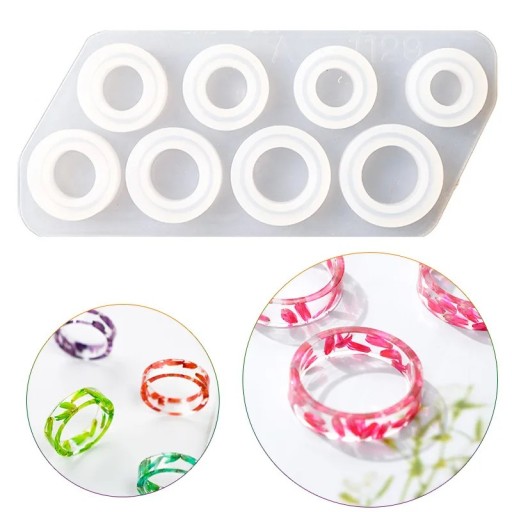





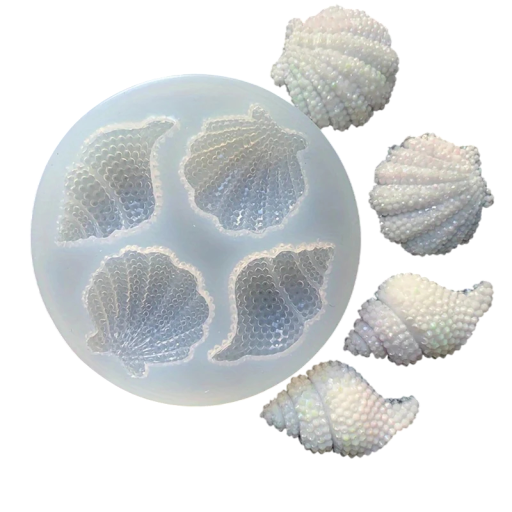

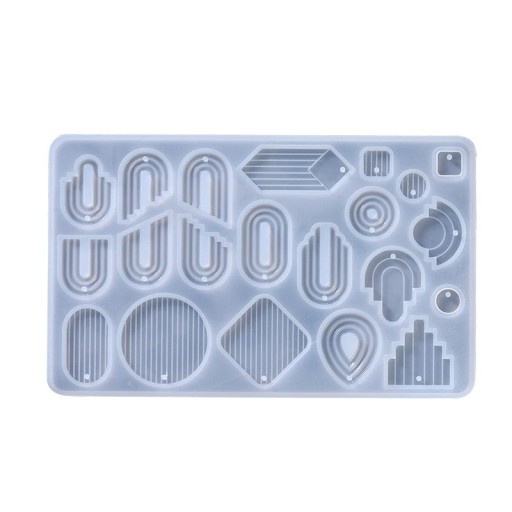



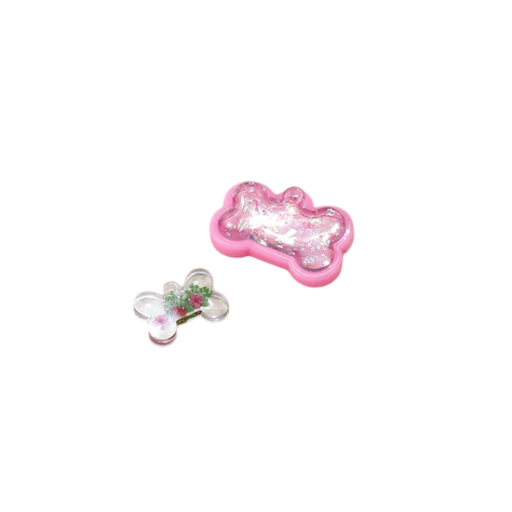
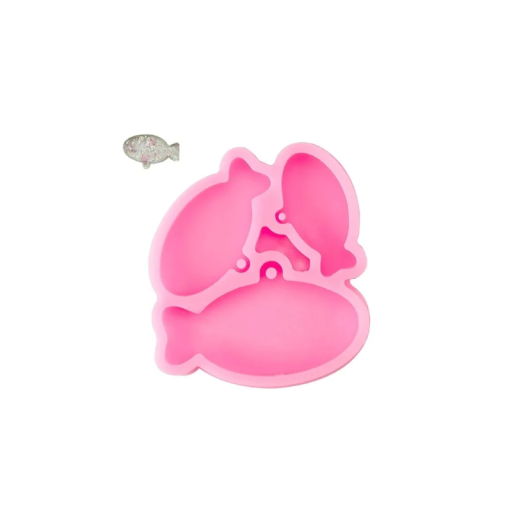



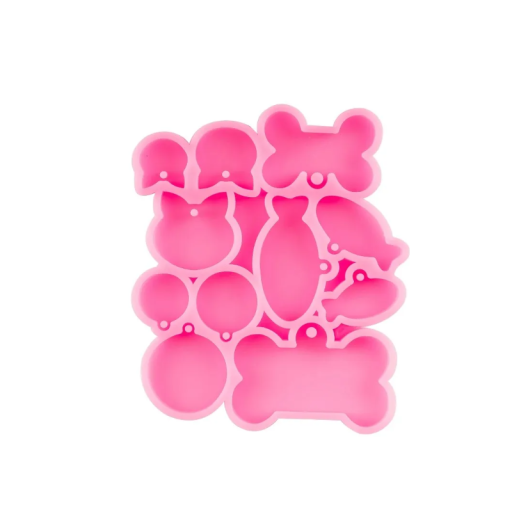
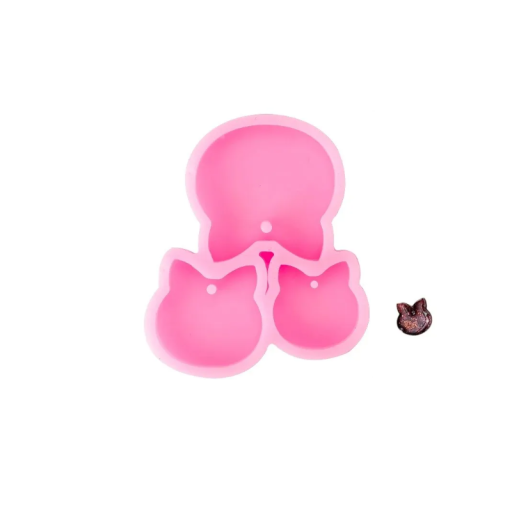

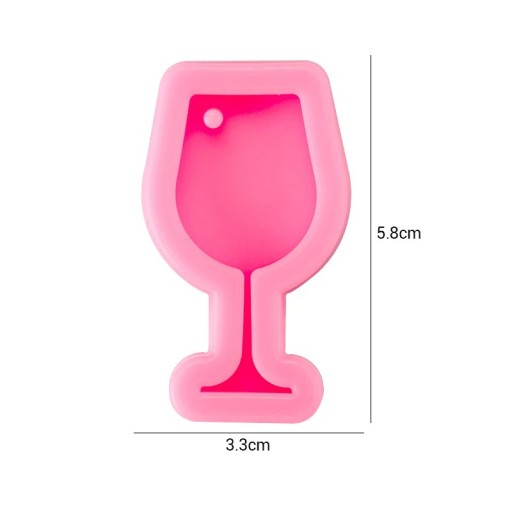


Resin moulds
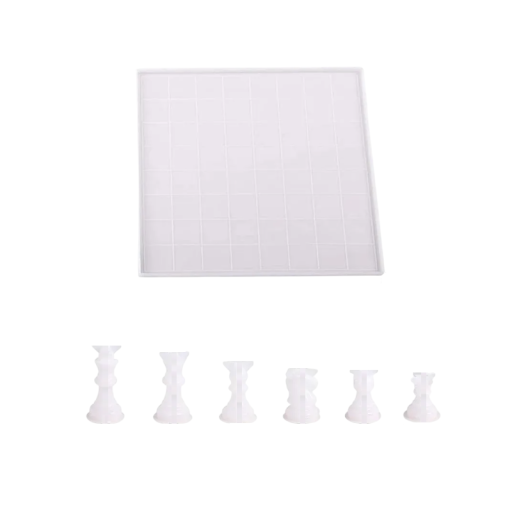
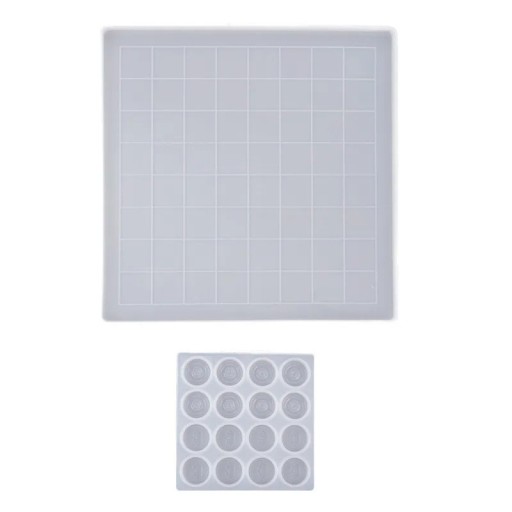
It is not the resin that makes the shape of a casting, it is the mould. Beyond the outline it also settles the surface: whatever is smooth and glossy inside the mould will be glossy on the finished piece, and equally, every scratch in the mould wall prints itself into every casting that follows. Choose a mould as carefully as you choose resin, and look after it.
Silicone moulds are flexible, so you can get a casting out even when it has curves or widens towards the bottom. They rarely need a release agent, and their inside is usually polished, so the casting comes out glossy and needs no sanding. Silicone is soft, though — a sharp tool leaves a nick in it easily, and that nick is permanent.
Plastic moulds are rigid and hold their dimensions more accurately, which suits straight edges and regular shapes. You will not get a casting out of one if it has an undercut, however, and a release agent is usually needed. In return they tend to cost less and take up less room when stacked.
The depth of the mould matters more at the point of choosing than its diameter does. A thick layer of resin heats itself as it sets, and in deep moulds that can end in bubbles, cloudiness or cracking; deep pieces are therefore usually poured in layers with a pause between them. The figures for maximum layer thickness and the time between layers always come with the resin, not with the mould.
Wash the mould out as soon as you have demoulded, while the residue has not dried on, and use neither knives nor scouring pads on it. Store it flat and free of dust, ideally covered. Wear gloves when working with resin, work somewhere ventilated, and follow the instructions from the makers of both the resin and the mould.