





























































Modelling and mini saws
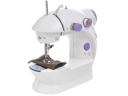
Balsa, thin plywood, plastic and brass are cut by model and mini saws where an ordinary saw breaks the material. The mini saws carry a wide, stiff blade for straight cuts, while U-shaped frame saws take a thin replaceable blade for curves and cut-outs. Teeth per inch run from thirty to sixty on model saws, and jeweller's saw blades are numbered from eight down to eight zeros. The blade goes in with the teeth facing the handle, because a frame saw cuts on the pull, downwards.
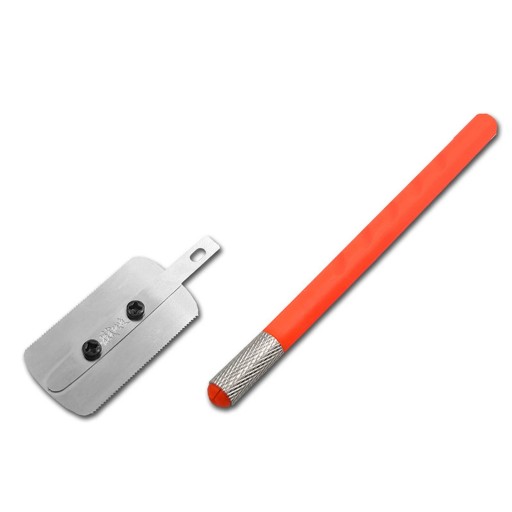
Modelling and mini saws
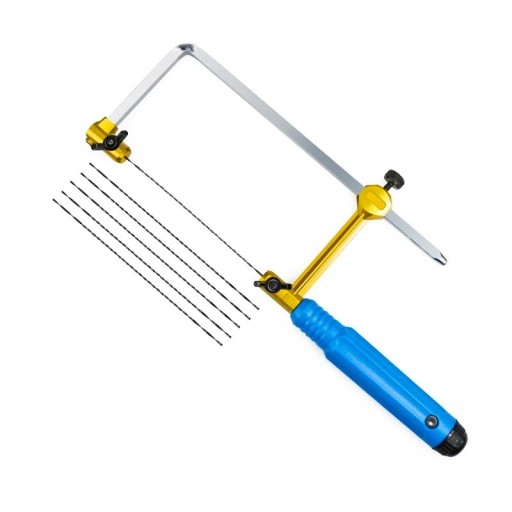
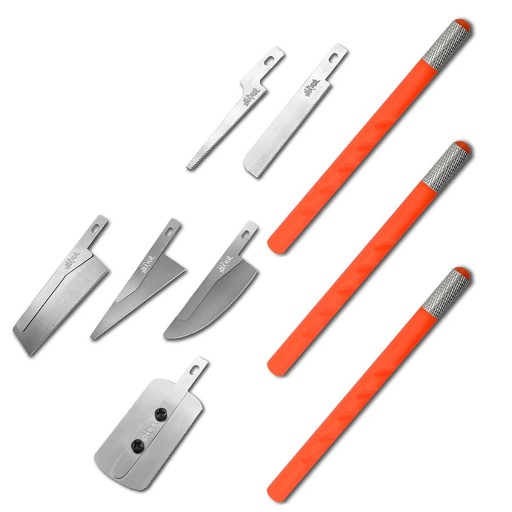
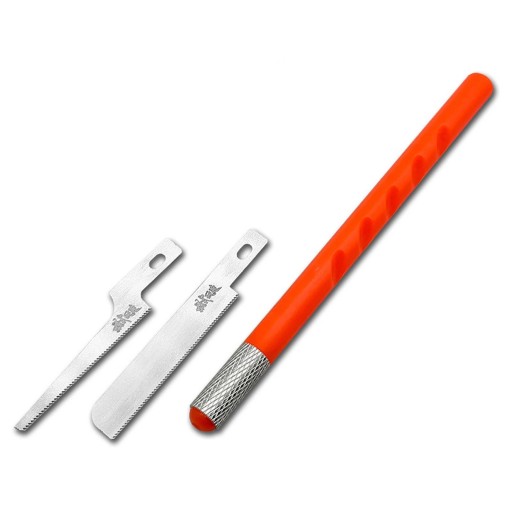
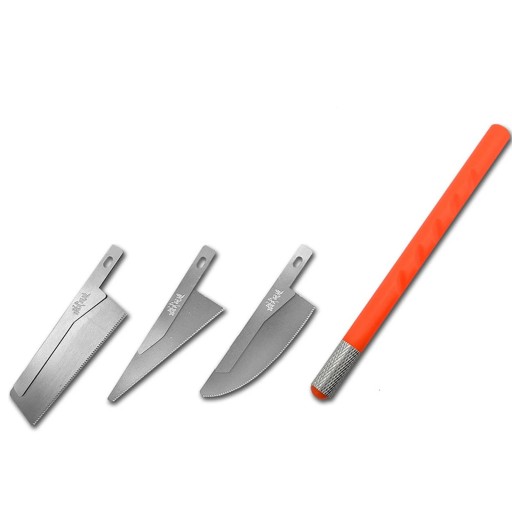
Where an ordinary saw breaks the material or will not fit, model and mini saws take over. The first group is mini saws with a stiff, wide blade, which run a straight cut in balsa, thin plywood and plastic. The second is U-shaped frame saws, into which a thin replaceable blade is tensioned for curves and cut-outs. The frame version is used above all by jewellers and silversmiths, because it goes through silver and brass too.
Blade width makes the difference between the two groups, because it decides whether the cut runs straight or in an arc. A wide, stiff blade does not wander in the material and holds the line even without a fence. A thin blade in the frame turns in any direction and takes tight curves. Anyone who needs both buys both saws, because one does not replace the other.
Thin material calls for the finest teeth available, which is why teeth per inch is the figure to check. Model saws carry thirty to sixty teeth per inch, which leaves a smooth edge even in a millimetre of plywood. Jeweller's saw blades are numbered instead from eight down to eight zeros, with eight the coarsest and eight zeros the finest. The three-teeth rule applies here as well, or a tooth breaks off against the edge.
A frame saw only works when blade tension is high enough, because a slack blade twists and snaps. The frame is squeezed slightly before tightening, the blade is clamped at both ends and tensions itself on release. On adjustable frames the depth changes too, meaning how far from the edge a cut can be made. A steel frame holds tension better than an aluminium one, but weighs more and tells on a long session.
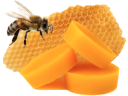
The blade goes into a frame saw with the teeth facing the handle, because the cut happens on the pull, downwards. Pushing achieves nothing, the saw is guided by its own weight and the pace comes from the length of the stroke, not from force. For metal the blade is rubbed with beeswax and the work rests against a notched bench pin, or the thin piece bends.