




































































Jigsaws and reciprocating saws
A jigsaw cuts curves, cut-outs and accurate straight lines in board, while a reciprocating saw tears down and shortens pipe, pallets and branches. On the jigsaw, orbital action speeds up progress in wood and, switched off, leaves a clean edge on laminate and veneer. On the reciprocating saw the stroke is what counts, and the blade sits in a universal half-inch shank, so it moves between brands. Teeth per inch are picked to match the material, from six for wood to twenty-four and more for steel.
Jigsaws and reciprocating saws
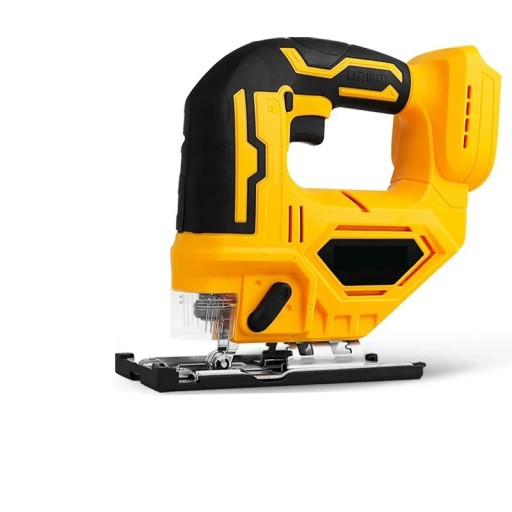
A jigsaw and a reciprocating saw work on the same principle but do different jobs. The jigsaw guides its blade through a shoe resting on the material, which is why it handles curves, cut-outs and accurate straight lines in board. The reciprocating saw guides the blade with nothing at all and leans on the operator's strength, which suits it to demolition and to pipe, pallets and branches. Anyone cutting furniture and board to size reaches for the jigsaw, anyone stripping out and thinning values the reciprocating saw.
What changes a jigsaw's cut most is the orbital action, meaning the forward movement of the blade in the upper part of the stroke. With the orbit switched off the cut turns slow and clean, as curves, laminate and veneer demand. The three orbital settings instead speed up progress in thick softwood, though the edge frays. The shoe tilts on most machines to forty-five degrees, so the saw manages a bevel cut as well.
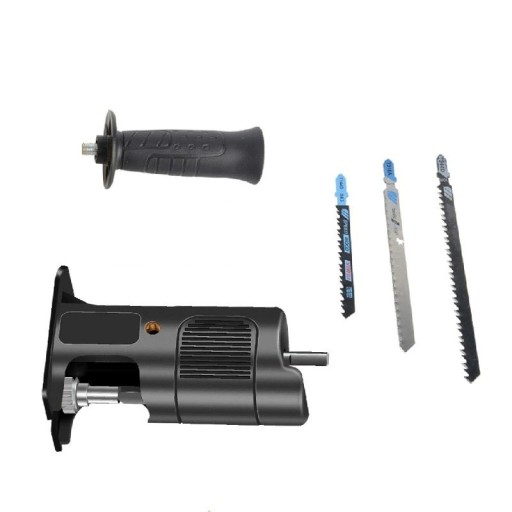
On a reciprocating saw the stroke length decides, because it sets how much material the blade removes in one movement. Machines around twenty millimetres are enough for pipe and thin sections, while a stroke over twenty-eight millimetres belongs to demolition and tree trunks. The blade sits in a universal half-inch shank and moves freely between brands. Too long a blade flexes in the cut, so it is chosen only a little longer than the material is thick.
Whether the blade cuts or merely rubs is decided by teeth per inch together with the blade material. Six to ten teeth per inch belong to wood and fast rough progress, fourteen to eighteen to plastic and soft metal. Above twenty-four teeth come steel and stainless, where at least three teeth must always be engaged. Bi-metal blades take both flexing and heat, so for nail-embedded wood and strip-out work nothing else is worth it.
Variable speed makes it possible to slow down for plastic and metal, where a fast blade would melt the material rather than cut it. Tool-free quick clamping brings a blade change down to a few seconds, and a blade with a T-shank goes into the jigsaw only one way round. Extraction and an anti-splinter guard keep the cut clean, though on the jigsaw it still pays to lay the show face of the board downwards.